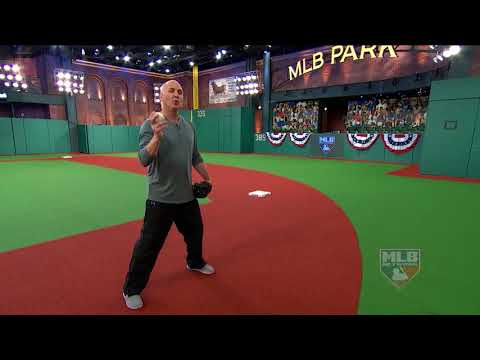
How to do the drill
- 1
Warm up with the Dynamic Throwing Warm-Up. Its throws count toward today's total.
- 2
Mark your age limit: 11–12, 60 steps (120 feet); 13–14, 75 steps (150 feet); 15 and up, 90 steps (180 feet).
- 3
Start 22 steps (45 feet) apart with 2 easy, arcing throws. Then back up 10 steps after each throw.
- 4
Stop at your marker, or sooner if a throw feels hard or misses your partner. Make 3 throws there; log that distance.
- 5
Walk in 15 steps (30 feet) after each throw, throwing flatter so it arrives on a line or one hop.
- 6
Ages 14 and up: at 45 steps (90 feet), make 3 firm throws at 8 out of 10 effort. End with 2 easy throws.
Coaching cues
- Easy arm, strong legs.
- Arc on the way out.
- Line on the way in.
What good looks like
Loose, arcing throws going out, flat throws coming in, and a longest easy throw that creeps up over weeks.
Safety
Long toss is a big throwing day, so stay under the throw cap: 25 throws for ages 11–12, 30 for 13–14 and 35 for 15 and up, warm-up throws included. Do it 1–2 days a week, never two days in a row. Skip it on a day you pitch and on the rest days Pitch Smart sets after a pitching outing. Stop right away at any shoulder or elbow pain and tell a parent or coach. No weighted balls, no radar gun and no throwing as far as you possibly can.
Why this drill
Throwing a little farther than a normal game throw, on a relaxed arc, builds arm strength and teaches the legs and body to power the throw. Sports medicine throwing programs build up the same way: short throws first, then longer ones, with a set number of throws and a distance that fits the player's age.
Next throwing drillPitching Towel Drill →